.svg)
What Happens to Your Machine After It Arrives at an Australian Port?
When a new excavator, wheel loader or dozer arrives in Australia, many people assume it simply comes off the ship and is delivered to the customer. In reality, there's a carefully coordinated process involving shipping lines, customs, biosecurity, port operators, transport providers and equipment dealers before that machine ever reaches its destination. Here's what happens behind the scenes.
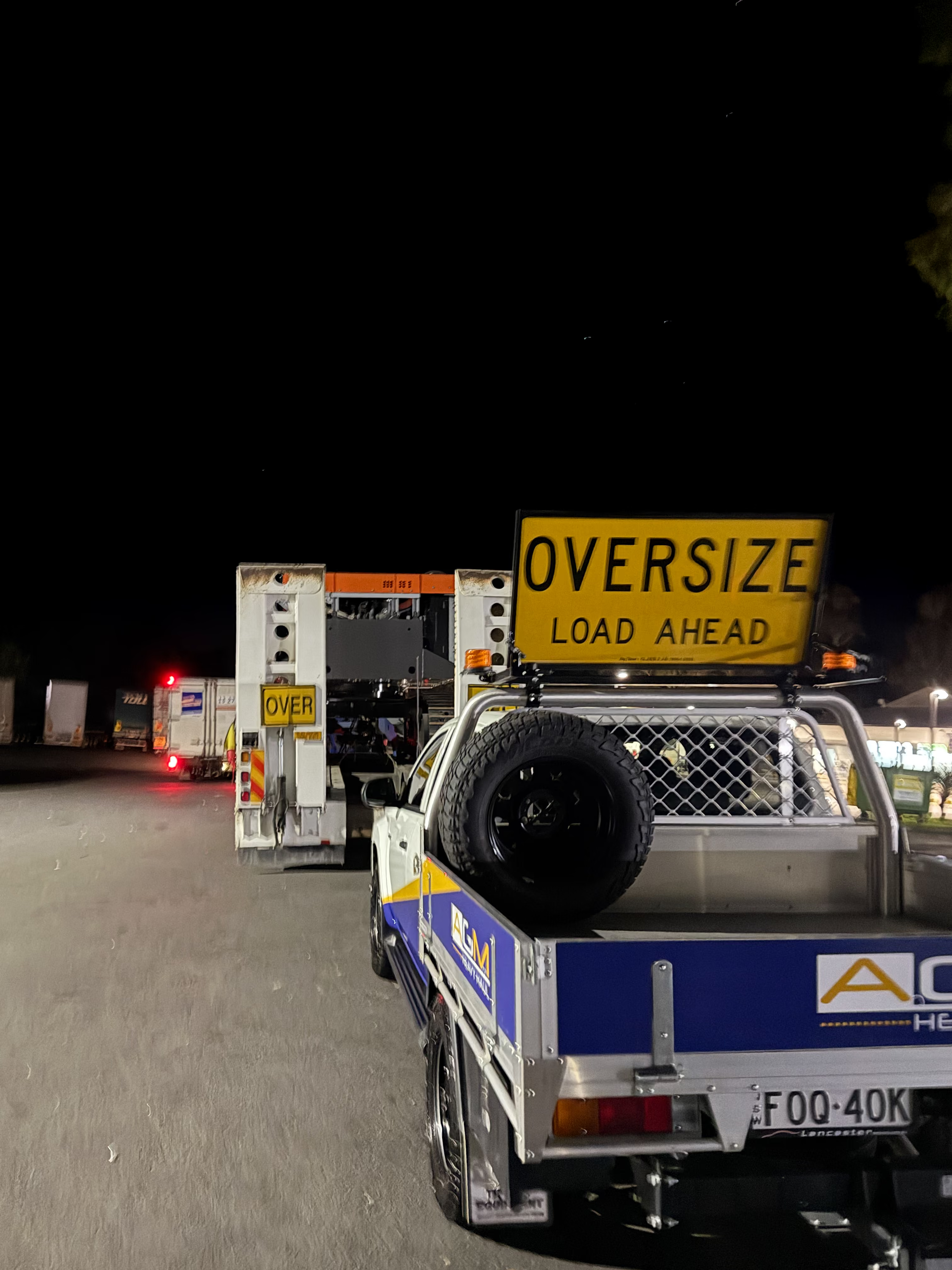
When a new excavator, wheel loader or dozer arrives in Australia, many people assume it simply comes off the ship and is delivered to the customer.
In reality, there's a carefully coordinated process involving shipping lines, customs, biosecurity, port operators, transport providers and equipment dealers before that machine ever reaches its destination.
Here's what happens behind the scenes.
Step 1 – The Vessel Arrives
Most construction equipment imported into Australia arrives via Roll-on/Roll-off (RoRo) vessels or, in some cases, flat rack containers.
Once the vessel berths, the cargo is unloaded by the port operator and moved into the designated holding area.
Although the machine is now physically in Australia, it isn't yet ready to leave the port.
Step 2 – Customs Clearance
Before any equipment can be released, import documentation must be processed through Australian Border Force.
This ensures all import requirements have been met and the shipment is legally permitted to enter Australia.
Without customs clearance, the machine cannot be collected from the wharf.
Step 3 – Biosecurity Inspection
Australia has some of the world's strictest biosecurity regulations.
Imported machinery may be inspected by the Department of Agriculture to ensure it is free from soil, plant material, insects and other contaminants.
If required, the machine may undergo cleaning or treatment before being released.
This is an important step in protecting Australia's agriculture and environment.
Step 4 – Transport Planning Begins
Once the equipment is available for collection, transport planning can begin.
Every machine is different.
Factors considered include:
- Overall dimensions
- Operating weight
- Collection location
- Delivery destination
- State regulations
- Permit requirements
- Escort vehicle requirements (where applicable)
Careful planning ensures the equipment arrives safely and complies with all relevant transport legislation.
Step 5 – Wharf Collection
The transport provider coordinates collection from the port.
This involves scheduling collection times, complying with port access requirements and ensuring the correct trailer configuration is used for the specific machine.
Timing is important, as unnecessary delays can result in additional storage or detention charges.
Step 6 – Delivery to the Dealer or Customer
Once loaded, the machine begins its journey to its final destination.
Depending on the project, this may involve:
- Delivery to an equipment dealership
- Transport to a regional branch
- Delivery directly to a construction site
- Delivery to a mine site
- Transfer into storage before final delivery
Every movement is planned to minimise delays while maintaining safety and compliance.
Why Experience Matters
Moving construction equipment is far more than simply loading a machine onto a trailer.
Successful deliveries rely on planning, communication and coordination between multiple organisations.
When timelines are tight, having an experienced transport partner helps reduce delays and provides confidence that every stage of the journey is managed professionally.
How AGM Heavy Haul Can Help
At AGM Heavy Haul, we specialise in the transport of construction, mining and industrial equipment throughout Australia.
Our team works closely with equipment manufacturers, dealerships, freight forwarders and project teams to coordinate machinery movements from Australian ports through to their final destination.
Whether it's a single excavator or a large project requiring multiple deliveries across several states, our focus remains the same—safe, reliable transport backed by clear communication and dependable service.
Need assistance with wharf cartage or heavy haulage?
Contact the team at AGM Heavy Haul to discuss your next machinery movement.

